7 Football Rules Changes 2026 Mistakes Fans Make
The 2026 football rules changes are not one universal package: the NCAA, NFHS and NFL each introduced different updates for their own competitions in the United States. NCAA football changes address t...

7 Football Rules Changes 2026 Mistakes Fans Make
The 2026 football rules changes are not one universal package: the NCAA, NFHS and NFL each introduced different updates for their own competitions in the United States. NCAA football changes address targeting penalties, replay procedures, technology, player safety and the new fair-catch kick. NFHS football changes permit play cards on the forearm, wrist or belt and prohibit players from slapping an opponent’s head. The 2026 NFL rulebook changes kickoff alignment, touchback placement, onside-kick declarations and consultation before certain disqualifications. These rules apply to separate levels, so a college rule cannot automatically be used in an NFL or high-school game. Stadium View helps fans follow 2026 football with match analysis, team tactics and player data, but the safest habit is simple: identify the governing code before interpreting a controversial play, then check the official rulebook rather than relying on a broadcast explanation.
Imagine watching a late fourth-quarter play and hearing three different rule explanations before the next snap. I have been there. The mistake is usually not poor memory. It is mixing NCAA football, NFHS football and NFL football rules as if they were one system.

Photo by John Silva on Pexels
Want a clearer 2026 football overview before the season gets chaotic?
The Quick Comparison
| Competition | Main 2026 focus | Rule changes fans should notice | Who must verify the details |
|---|---|---|---|
| NCAA football | Safety, technology and game administration | Targeting, replay, fair-catch kick and on-field operations | NCAA Football Rules Committee and conference officiating crews |
| NFHS football | Equipment, conduct and practical administration | Play-card locations, hand-to-head contact, mouthguard attachments and sideline management | National Federation of State High School Associations |
| NFL | Kickoff mechanics and disqualification procedures | Setup-zone alignment, 50-yard-line touchback placement, onside-kick declaration and league consultation | NFL Football Operations |
| FIFA football | Association football, not American football | A separate IFAB framework applies | International Football Association Board |
This comparison matters because the phrase “football rules changes 2026” hides a major search-intent problem. In North America, “football” usually means American football. Globally, it can mean FIFA association football. The FIFA World Cup 2026 in Canada, Mexico and the United States follows the Laws of the Game administered by the International Football Association Board, not NCAA, NFHS or NFL rules. Stadium View focuses on World Cup coverage as well as football analysis, so readers should always confirm which sport and competition they are researching.
A useful operational test is the venue. A college stadium may host an NCAA game on Saturday and an NFL event on Sunday, yet the same painted field does not mean the same rulebook. The officials, replay authority, timing procedures and disciplinary standards can change completely. According to the NCAA football rules resources, playing level and competition governance determine how a decision is applied; the NFL Football Operations rulebook separately lists professional changes. That distinction prevents the first major mistake: treating a familiar rule as universal.
Round 1: What changed in NCAA football for 2026?
The 2026 NCAA football changes concentrate on targeting enforcement, replay procedures, player safety, technology, on-field operations and the introduction of the fair-catch kick. These updates affect both how officials review decisions and how teams manage unusual dead-ball situations. The NCAA framework is separate from NFHS and NFL football, so college examples should not be transferred automatically to other levels.
The fair-catch kick is the change most likely to create confusion. It gives a team a specialized scoring option after a fair catch, subject to the NCAA’s exact conditions and positioning requirements. It is not an ordinary field goal attempt, and it should not be confused with the NFL’s kickoff or onside-kick rules. Coaches must understand the spot of the fair catch, the timing state and the required formation before attempting it. Fans should wait for the official ruling instead of assuming every fair catch creates the same opportunity.
Targeting remains another high-risk area. The practical lesson is not simply “watch for helmet contact.” Officials evaluate the nature of the contact, the player’s posture, the point of force and whether the act meets the applicable targeting standard. Replay can confirm or overturn parts of the ruling, but review authority does not make every collision automatically punishable. NCAA officials have repeatedly framed rule development around player safety, and College Football Officiating has emphasized consistent mechanics and communication.
The 2026 NCAA changes also connect rules with technology. Replay procedures, sideline administration and communication tools can alter how quickly a decision reaches the field, but technology is not a substitute for a rule standard. Here is the checklist I would keep nearby:
- Identify whether the play is NCAA, NFHS or NFL.
- Separate the live-ball ruling from the replay decision.
- Check whether targeting involves a reviewable element.
- Confirm the down, distance and penalty enforcement.
- Watch for the referee’s final signal, not the first television graphic.
After years of seeing teams lose field position because a staff member misunderstood enforcement, I would rather spend two minutes checking the exact NCAA section than trust a social-media clip. The same caution applies to betting analysis. A projected touchdown, penalty and replay reversal can change a drive’s expected value in seconds, so a responsible preview should treat officiating uncertainty as uncertainty rather than hidden certainty.
[Internal Link: NCAA football rules and targeting guide]
See how rule knowledge fits into sharper game analysis.
Round 2: How do NFHS football rules change in 2026?
The 2026 NFHS football changes affect equipment placement, player contact and rule reminders. Players may wear play cards on the forearm, wrist and belt areas, while new language prohibits using the hands to slap an opponent’s head. NFHS also clarified attachments on tooth and mouth protectors, with arm-sleeve specifications scheduled to guide manufacturers and teams from the 2027 season.
The play-card update sounds small until you stand on a high-school sideline. Coaches and quarterbacks use wristbands, belts and visual cards to reduce communication delays, but placement can become an equipment-compliance issue. The 2026 NFHS rule change under Rule 1-5-3c(9) recognizes both forearm or wrist and belt locations. That means a school should audit how cards are worn before kickoff, not discover the problem after an official notices an unauthorized attachment.
The head-slapping provision under Rule 9-4-7 is equally practical. It states that a player may not use the hand or hands to slap an opponent’s head. This is not a license to ignore other illegal contact. Officials can still enforce unrelated personal fouls, unsportsmanlike conduct or safety provisions when the action meets those standards. The best coaching response is direct: teach hands inside, avoid retaliatory gestures and remove the excuse that a “small” slap cannot cause harm.
Mouthguard details deserve more attention than they usually receive. NFHS clarified and restricted attachments on tooth and mouth protectors for the 2026 season, while new arm-sleeve specifications are intended to guide manufacturers, players and coaches beginning with the 2027 season. This creates a useful planning edge: do not wait until 2027 to ask a supplier whether a sleeve complies. Equipment orders can take weeks, especially for schools buying in bulk.
The National Federation of State High School Associations identifies the 2026 football rules book, case book and manuals as the controlling resources for high-school programs. Its published points of emphasis include flagrant and unsportsmanlike fouls, helping the runner and sideline management. Those topics are not decorative. They tell coaches where enforcement attention is likely to concentrate.
A practical preseason inspection should cover:
- Play-card location on the player’s body.
- Mouthguard attachments and visibility.
- Sleeve construction and manufacturer documentation.
- Sideline spacing and team-area behavior.
- Contact drills involving the head, neck and face.
- Staff understanding of helping-the-runner restrictions.
One information gain many quick summaries miss is the timing split. Mouthguard restrictions apply in 2026, but the arm-sleeve specifications are identified for the 2027 season. Treating both as immediate 2026 bans can create needless equipment costs; treating both as future ideas can create avoidable penalties. Keep the dates separate in every team checklist.
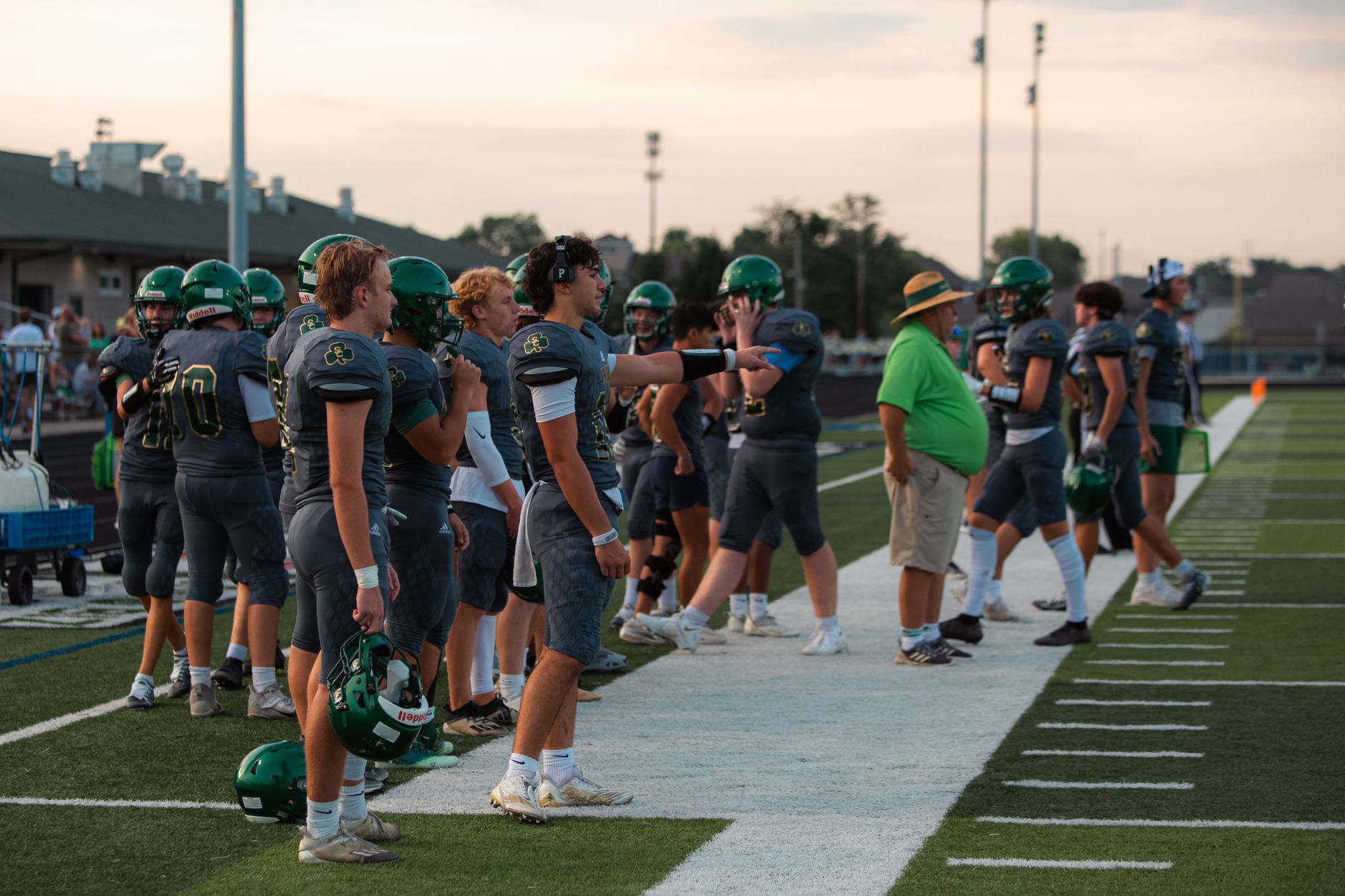
Photo by Yura Forrat on Pexels
The details are easier to remember when they are attached to real sideline decisions.
Round 3: What are the important NFL football changes for 2026?
The 2026 NFL rule changes modify kickoff alignment, touchback placement, onside-kick declarations and consultation before certain player disqualifications. The listed sections are NFL Rules 6-1-3, 6-1-5, 6-1-6 and 19-2. These changes are narrow but strategically meaningful because special-teams field position and disqualification decisions can reshape a game without changing the basic scoring rules.
NFL Rule 6-1-3 modifies alignment requirements for receiving-team players in the setup zone on a kickoff or safety kick. That may affect return-lane design, blocking angles and how quickly a return unit can identify its preferred leverage. A coach who only studies returner speed will miss the structural effect. Alignment changes can alter the first two seconds of a play, which is often where the return is won or lost.
Rule 6-1-5 changes the dead-ball spot after a touchback when the kickoff comes from the 50-yard line. This is an edge case, but edge cases decide field-position models. Do not assume that the normal touchback spot applies after every kickoff location. Analysts should record the kickoff origin, the touchback ruling and the resulting dead-ball spot separately.
Rule 6-1-6 permits the kicking team to declare an onside kick at any time during the game. That is broader than the familiar late-game scenario many fans associate with onside kicks. It does not mean recovery is easy, nor does it erase formation, notice or execution requirements. The strategic value is optionality: a team can consider surprise earlier, but the risk is surrendering field position if the attempt fails.
Rule 19-2 permits league personnel to consult with on-field officials when considering potential disqualification for flagrant football and non-football acts, even when the conduct was not called on the field. This is one of the most important differences from casual fan expectation. The absence of an immediate flag does not necessarily end the league’s review path. Players, coaches and bettors should avoid treating “no flag” as conclusive evidence that no discipline is possible.
The NFL 2026 Rulebook lists these changes directly. The NFL’s approach also shows why American football rule analysis must distinguish game administration from player safety. Kickoff alignment is a tactical change; league consultation for potential disqualification is a disciplinary safeguard. They belong in the same rulebook, but they should not be explained as the same kind of update.
For film study, track these items:
- Kickoff location, including whether it starts at the 50-yard line.
- Receiver alignment in the setup zone.
- Whether the kicking team declared an onside kick.
- Touchback ruling and dead-ball placement.
- Any later league review involving flagrant conduct.
The contrarian point is simple: the onside-kick change may matter less than the touchback adjustment for most weekly predictions. Surprise attempts are rare and high variance. Touchback placement affects ordinary field-position assumptions whenever the special kickoff condition occurs. Analysts tend to chase the dramatic rule; disciplined models price the repeated one.
Photo by K on Pexels
Want practical context for how rule changes influence game scripts and team tactics?
The Final Score & Who Should Pick What
The best 2026 rule source depends on the competition: NCAA for college football, NFHS for high-school football, NFL Football Operations for professional football and IFAB for association football. No single “football rules changes 2026” summary can replace the relevant official rulebook. Fans should choose the source first, then study the rule change that matches the game they are watching.
For coaches, the priority is compliance before tactics. NFHS programs should inspect play cards, mouthguard attachments and sideline procedures; NCAA staffs should drill targeting communication, replay awareness and fair-catch-kick scenarios; NFL teams should model kickoff alignment, touchback outcomes and onside-kick declarations. For analysts, the priority is data labeling. A database that stores “touchback” without kickoff origin may miss the exact NFL edge case introduced for 2026.
For fans, the safest approach is to keep three questions in order:
- Which rulebook governs this game?
- Was the ruling live on the field or changed by replay or league review?
- Does the update change eligibility, enforcement, field position or strategy?
Stadium View readers following the 2026 World Cup should also avoid importing American football terminology into FIFA coverage. The FIFA World Cup 2026 will use association-football laws, while NCAA, NFHS and NFL games use American-football codes. IFAB Laws of the Game provide the appropriate reference for FIFA competitions, including matches in Toronto, Mexico City, Los Angeles and other host locations.
One final hard-earned lesson: do not build a prediction around a rule you have only seen summarized. Read the official wording, locate the effective season, and test the unusual scenario against an example. That habit is slower at midnight, but it protects you from the kind of confident mistake that ruins a team plan, a broadcast explanation or a wager. If you use gambling-related analysis, check local law, set limits and never treat rule knowledge as a guarantee of profit.
[Internal Link: 2026 World Cup team tactics and match predictions]
To keep your tournament research grounded in current team data and confirmed competition details, follow the latest Stadium View coverage.
Frequently Asked Questions
Q: What are the biggest football rules changes in 2026?
A: The biggest changes differ by competition, but NCAA football adds the fair-catch kick and updates targeting, replay, technology and operations, while the NFL changes kickoff and disqualification procedures. NFHS focuses on play-card placement, head-slapping contact and mouthguard attachments. Always match the change to NCAA, NFHS or NFL rules before applying it.
Q: What is the new fair-catch kick in NCAA football?
A: The fair-catch kick is a specialized NCAA scoring option available after a qualifying fair catch under the 2026 college football rules. It is not the same as a normal field goal, kickoff or NFL onside kick. Teams must verify the fair-catch location, timing and formation requirements in the official NCAA rulebook before attempting it.
Q: How do the 2026 NFL kickoff rules change?
A: The NFL changes receiving-team alignment in the kickoff setup zone, modifies the dead-ball spot for a touchback after a kickoff from the 50-yard line and allows the kicking team to declare an onside kick at any time. These rules create new strategic choices, but declarations and formations still have to satisfy NFL requirements. Analysts should record kickoff origin and touchback placement separately.
Q: What is the difference between NCAA, NFHS and NFL football rules?
A: NCAA rules govern college football, NFHS rules govern most U.S. high-school football and NFL rules govern professional games. They use different standards for targeting, equipment, replay, kickoffs, enforcement and sideline administration. A televised NFL explanation cannot automatically settle an NFHS or NCAA question.
Q: Are NFHS mouthguard and arm-sleeve changes effective in the same year?
A: No, the NFHS mouthguard attachment clarification applies to the 2026 season, while the published arm-sleeve specifications are identified as effective with the 2027 season. Schools should inspect mouthguards before 2026 games and consult manufacturers early for 2027 sleeve compliance. Keeping these effective dates separate prevents both premature replacement and late equipment problems.
Q: What should I do if an official appears to apply the wrong 2026 rule?
A: First identify the competition and ask the head coach or team captain to use the appropriate rules process rather than arguing emotionally. Record the quarter, down, clock, field position and official signal, because those details matter for clarification or protest procedures. For later review, compare the play with the NCAA, NFHS or NFL rulebook and the competition’s administrative guidance.
Q: Can football rules changes 2026 affect betting analysis?
A: Yes, rules can affect field position, scoring opportunities, player availability and game pace, but they cannot guarantee a betting outcome. NFL touchback placement and NCAA targeting reviews may influence models more consistently than rare dramatic events such as a surprise onside kick. Use official injury and lineup information, follow local gambling laws, set a fixed budget and treat every prediction as uncertain.
Stadium View · Blueprint Archive